Overcoming IT and OT Silos: Proven Approaches for Success



Meet PLCnext Technology—a networking powerhouse bridging IT and OT with ease. Powered by open Linux-based controllers, it supports industrial protocols like OPC UA, MQTT, PROFINET, and PROFIBUS and various more protocols, giving your machines full communication fluency across legacy and modern systems alike. From edge to cloud, PLCnext Technology keeps your data flowing seamlessly.
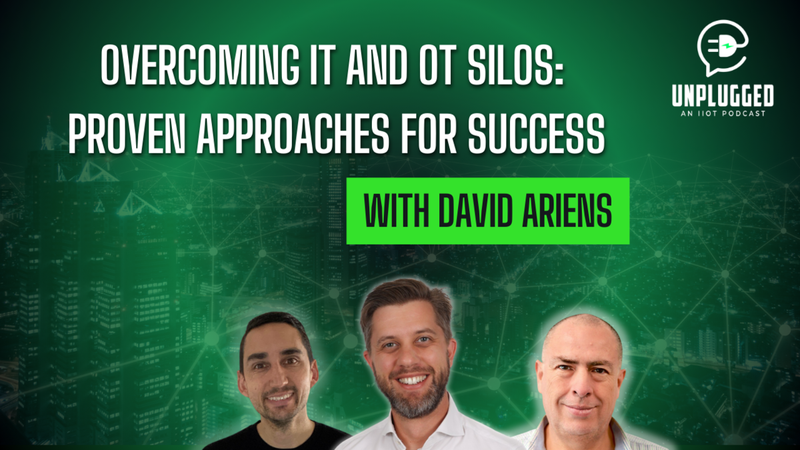
This episode brings together Phil Seboa, Ed Fuentes, and their guest, David Ariens, who shares his deep experience with IT and OT integration in industrial automation. The article highlights three central lessons: why organizational barriers still exist, how trust and collaboration drive progress, and strategies for scaling digital transformation projects. These lessons speak directly to engineering managers, IT/OT practitioners, and business leaders striving for smoother technology adoption and digital results.
The intersection of IT and OT continues to pose challenges for industrial organizations. David points out that this divide is more than a technical matter—it's rooted in reporting lines and priorities. "It goes down to the simple fact that it is a COO versus CIO type of discussion...the silos are there," David explains. Safety and reliability dominate operations, while IT is seen as a support function. Phil and Ed both observe that even as organizations aim to unify digital strategies, the underlying structures make complete convergence unlikely. The differences in life cycles, skill sets, and priorities mean that integration remains an ongoing journey rather than a quick fix. For leaders in the field, understanding these core tensions helps set realistic expectations and guides more tailored, effective change efforts.
Technology alone cannot solve the persistent IT/OT divide; organizational setup, collaboration, and trust are vital for true progress. David emphasizes, "It's actually mostly about trust. The interesting thing is that...people love to have a technological barrier because then you go like, oh, we need to buy new technology and it's all fixed." Ed and Phil reinforce this message, noting that successful teams develop joint strategies and foster open dialogue. The most effective organizations, David shares, build multidisciplinary teams, whether for cybersecurity compliance or data-driven projects: “Companies who are able to get furthest in this approach...have a combination of having…a central team—an enablement team.” This team owns standards but also engages local champions throughout the business. Sharing decision-making and clear communication are foundational. Readers can benefit by prioritizing relationship-building, forming cross-functional teams, and championing trust in their own organizations.
Scaling Digital Transformation Means Balancing Standardization with Customization
Scaling successful digital transformation isn’t just about deploying technologies—it's about balancing standardization with necessary customization. Phil observes, “You know, having that core team of champions within the business to define your digital strategy…really crucial in those early stages.” David’s firsthand experiences reveal that successful projects start by involving operators and end users from day one. Solutions tailored explicitly to their real pain points always show better adoption. At the same time, organizational governance, centralized standards, and a pragmatic approach to divergent use cases are non-negotiable for cross-site scalability. “You want to have your cybersecurity sets carved in stone. You immediately want to involve your cybersecurity responsible Group, whatever in the discussion as well, that you have a foundation...this is going to work,” David explains. The most impactful projects combine a strong, shared architecture with iterative refinements driven by user feedback. For readers planning to roll out new systems, this means balancing consistency with flexibility—and always maintaining a cycle of learning and improvement as part of the operating model.
David points out, "It's actually mostly about trust. The interesting thing is that...people love to have a technological barrier because then you go like, oh, we need to buy new technology and it's all fixed."
Phil notes, “Having that core team of champions within the business to define your digital strategy…really crucial in those early stages.”
This episode offers clear direction for professionals at every level involved in industrial digital transformation. First, recognize that persistent organizational barriers between IT and OT are normal and require nuanced management, not simple solutions. Second, invest in trust and open collaboration. Building mixed teams that own standards but engage end users leads to far greater success. Third, when scaling digital projects, balance core standards with site-by-site flexibility—solutions will be better adopted and more sustainable. By applying these lessons, readers are better positioned to push projects forward, avoid common pitfalls, and create lasting value for their organizations. Next steps include assessing your own company’s gaps in trust and collaboration, gathering champions across silos, and structuring projects so both central teams and local users share input and ownership.
David Ariens brings more than a decade of experience in industrial digitalization, data operations, and organizational strategy—from chemical plants to consulting roles. He is co-founder of the ITOT Insider blog and academy, focused on practical approaches for data ops, organizational models, and industrial AI. David’s practical, story-driven insights bridge the gap between theory and real-life, helping teams achieve meaningful progress in complex industrial settings.
PLCnext Technology is the ecosystem for industrial automation consisting of open hardware, modular engineering software, a global community, and a digital software marketplace.
PLCnext Technology connects the IT and OT worlds
Make your application fit for IIoT and Industry 4.0
Digitalization and globalization are placing new demands on industrial automation. The precisely tailored design of the open automation system is just as important as flexible, modular expansion. In addition to standard programming of PLC systems in accordance with IEC 61131-3, parallel programming and the combination of programming languages such as C/C++, C#, and Matlab® Simulink® in real time is also possible with PLCnext Control. Accelerate your application development process with the free basic version of PLCnext Engineer. Or use your familiar programming environment. You decide.
With simple cloud integration, the option to use open source software, and the ever-expanding expertise of the PLCnext Community, you will benefit from new forms of collaboration. The resulting solution apps, software modules, runtime systems, and function extensions are available in the PLCnext Store and save an enormous amount of time and money when creating applications. This makes PLCnext Technology the ideal ecosystem for your modern automation challenge.