Digital Transformation in Manufacturing Insights
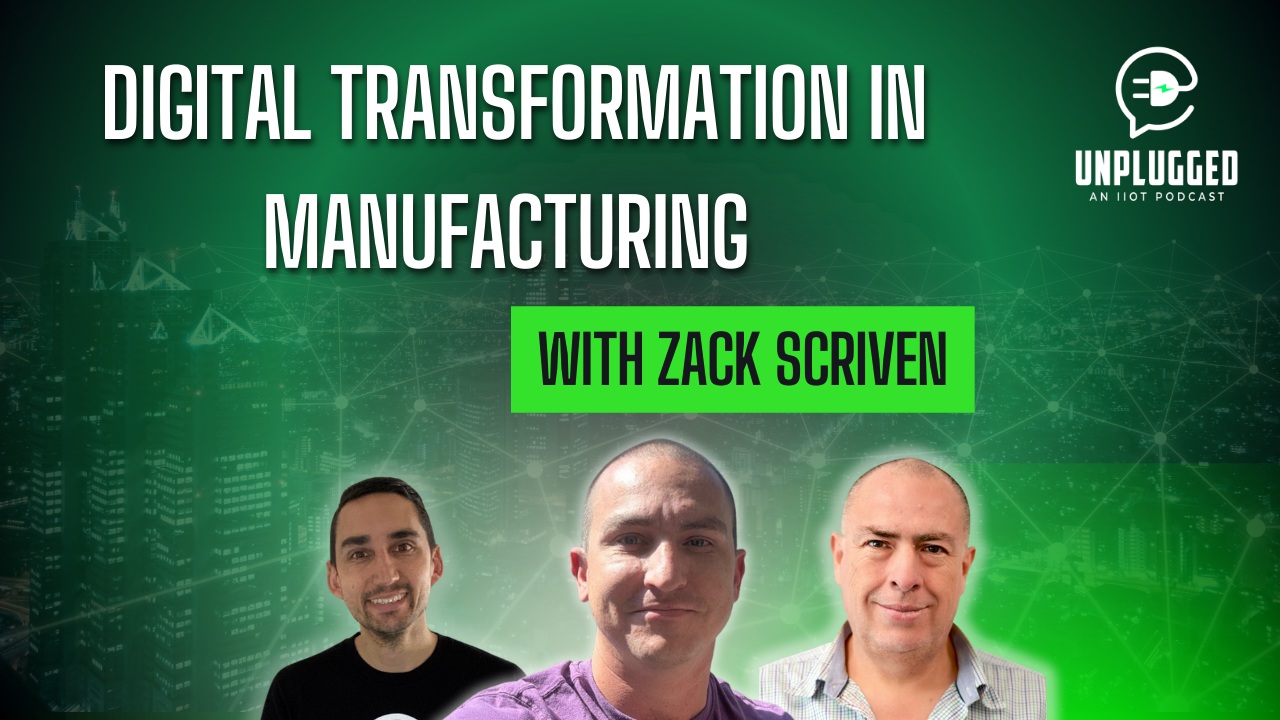


Phil Seboa and Ed Fuentes welcome Zack Scriven—a recognized engineer, educator, and digital content creator—to discuss the evolving landscape of digital transformation in industry. This episode centers on three essential points: why a clear digital strategy is critical, how adopting a unified namespace revolutionizes industrial systems, and the power of community-driven content to fuel change and learning. These themes speak directly to engineers, system integrators, manufacturing leaders, and anyone seeking to advance smart manufacturing initiatives.
Digital transformation is more than upgrading technology; it requires a fundamental shift in how an organization thinks and operates. According to Zack Scriven, most failed digital initiatives can be traced to missing or muddled strategies. He warns, “So often companies will start a digital transformation initiative without a clearly defined digital strategy. Why is it that you want to become digital?” This lack of clarity causes projects to stall, fail, or fizzle out despite major investments. Scriven underscores that organizations should define concrete objectives from the start—think improved efficiency, visibility, or new business models—and gain buy-in from leadership and stakeholders across departments.
He explains that digital transformation “enables a business model shift, an operational shift, a cultural shift.” It’s not enough to simply buy new systems or follow technology hype. Success relies on aligning teams, optimizing processes, and continually revisiting the strategy as technology and organizational needs change. Scriven’s approach puts purpose before tools, steering organizations to measure progress and adapt quickly.
In traditional manufacturing environments, valuable data often sits trapped inside isolated systems, holding back the insights needed for continuous improvement. Scriven describes firsthand how this siloed approach hinders progress, recalling, “In my early days doing water wastewater treatment, it was an entire data silo... Because I wanted to do simple things like track pump efficiency and calculate cost or return on investment. And you just couldn’t do that without access to that data.” The solution, Scriven explains, is the adoption of a unified namespace (UNS)—a single source of truth that organizes and exposes operational data across all systems and business units.
The benefits are immediate: more efficient data flow, meaningful business intelligence, and the ability to scale solutions as factories grow or diversify. Scriven points out that unified namespace “is cross-functional. IT teams can understand it, OT teams, non-technical people can understand it. And the most advanced architects in the world are designing with it.” Whether integrating edge devices, MES platforms, or cloud analytics, UNS provides a lightweight, flexible backbone for Industry 4.0 architectures—making scalable, vendor-neutral, and future-ready solutions possible.
For many in the industrial space, understanding new architectures and strategies can be a barrier, not just for engineers but also executives and operators. That’s why open, authentic content—and the communities built around it—are so valuable. Scriven recognizes that creating relevant, practical educational materials helps demystify digital transformation. “We’re accelerating the transformation... like, we’re moving the needle as a community,” he states. He and his peers offer approachable tutorials, interviews, and real-world examples, equipping both newcomers and veterans to tackle modern challenges. Scriven also discusses the impact of sharing not just technical how-to’s but also stories of leadership, projects gone wrong, successes, and lessons learned.
This approach is “helping save and create middle class jobs in manufacturers by helping them digitally transform, doing more with less, staying competitive in a global marketplace.” As Scriven sees it, including a wide range of voices—engineers, integrators, and even critics—keeps the conversation honest and the knowledge relevant. The result is a growing ecosystem of practitioners empowered to change their organizations for the better.
"Unified namespace, edge driven, report by exception, lightweight open architecture. If you start there and you expand, you’ll be all right.” — Zack Scriven
]: Open content and community engagement, fueled by leaders like Scriven, has dramatically improved knowledge sharing, skills development, and adoption rates in smart manufacturing.
Success in digital transformation relies on purposeful strategy, modern architectures like unified namespace, and strong education through open content and community. Readers are encouraged to take inventory of existing strategies, assess how data is managed and shared, and seek fresh learning opportunities—including podcasts, videos, and training programs. Consider starting with a small proof-of-concept: pilot a unified namespace architecture using open-source or trial software, involve both IT and OT teams, and present measurable business value to leadership. Share your results—successes and setbacks—with your peers to contribute to the growing movement towards smarter manufacturing.
Zack Scriven is a respected engineer and influential educator in industrial automation and digital transformation. Raised in a family business focused on system integration, Scriven’s early exposure to SCADA evolved into a passion for architecture, education, and digital content. Co-founder of 4.0 Solutions, he is known for accessible training, honest industry commentary, and championing the unified namespace approach. Zack continues to shape digital engineering through consulting, coaching, and community leadership—impacting factories, engineers, and leaders worldwide.