Maximizing Cloud Benefits for Industrial IoT
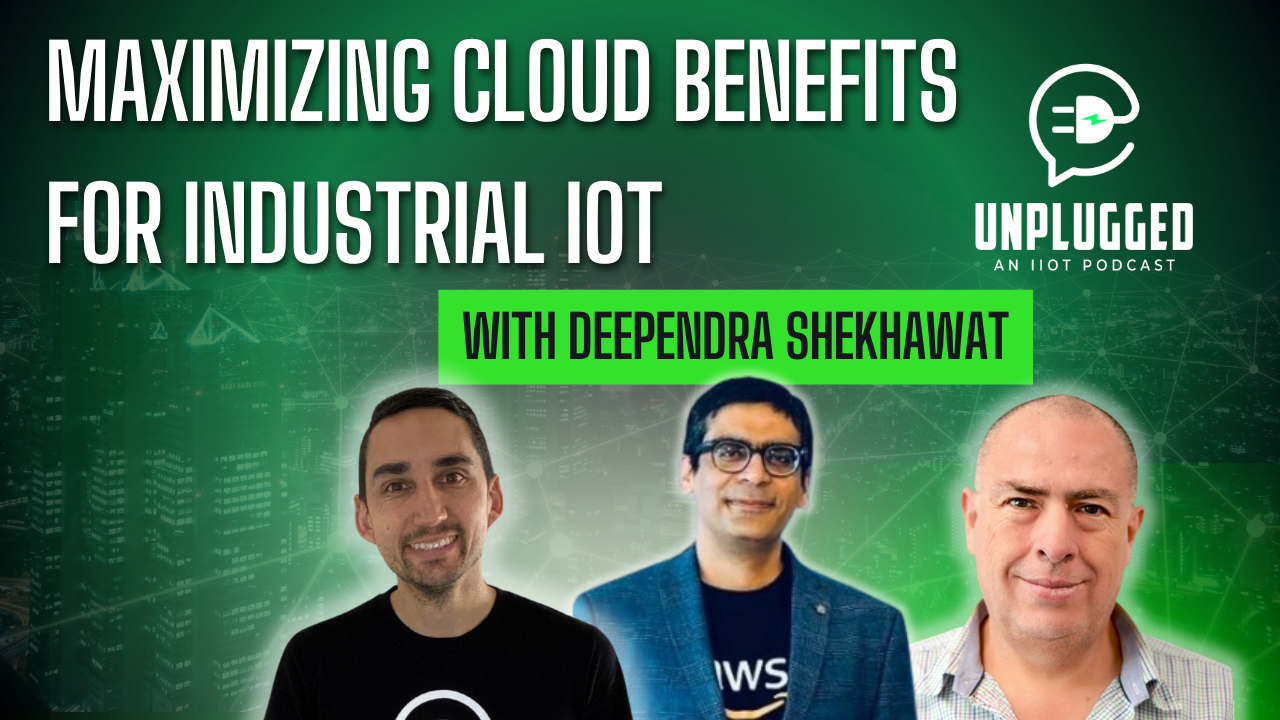


Phil Seboa and Ed Fuentes welcome Deependra Shekhawat, a specialist solutions architect at Amazon Web Services, to discuss cloud computing in the energy sector. With over 15 years of experience, Shekhawat shares insights on cloud adoption, security challenges, and the future of AI in the industry.
Shekhawat points out that the main obstacle to cloud adoption is often change management. "It's typically the people and the culture, which is the most important component," he explains. Organizations need to address employees' concerns about how cloud technology will impact their roles and daily work.
To overcome these challenges, Shekhawat recommends securing leadership commitment to the change, providing clear messaging about the benefits of cloud adoption, investing in employee skills development, and partnering with experienced cloud providers for smooth implementation.
He emphasizes, "If you really want the cloud to be an enabler for your organization or any change management, you got to show true leadership in these areas."
For energy companies concerned about cybersecurity, Shekhawat describes how operational technology (OT) data can be securely managed in the cloud. He explains, "We have proven to them that you can have in the cloud, completely private and isolated network, which is not connected to the Internet."
Key security measures include creating isolated virtual private clouds (VPCs), implementing strict access controls, using encrypted connections for data transfer, and deploying firewalls and packet inspection tools.
This secure foundation allows companies to move workloads like process historians to the cloud, enabling advanced analytics and remote monitoring capabilities.
Shekhawat is excited about the potential of generative AI in the energy sector. He describes how AI agents could perform complex tasks, such as asset integrity management and field optimization. "Imagine these agents talking to each other, making interactions, and then figuring out how they work together better for their various personas," he says.
These AI agents could analyze unstructured data from various sources, provide insights to field operators, optimize production while minimizing downtime, and generate field-level optimization plans.
Shekhawat believes this technology will significantly impact the industry, stating, "It's about building out a real solution for this in a real customer base."
"Cloud computing is essentially an on-demand delivery of IT resources, over the Internet with a pay-as-you-go pricing." - Deependra Shekhawat
Cloud computing offers significant benefits to the energy sector, from cost savings to advanced analytics capabilities. However, successful adoption requires strong leadership, employee engagement, and a focus on security. As the technology continues to evolve, generative AI presents exciting opportunities for further optimization and innovation in the industry.
Deependra Shekhawat is a specialist solutions architect at Amazon Web Services with over 15 years of experience in cloud and IoT. He has helped organizations across industries, particularly in energy and utilities, to implement cloud solutions and achieve results. Shekhawat is passionate about continuous learning and staying current with emerging technologies in the energy sector.
Smithtek is committed to providing reliable, Australian-made solutions for remote asset management. Our systems are designed to be intuitive and adaptable, making integration with existing infrastructure straightforward. We prioritize simplicity in user experience, ensuring that our technology is accessible for all levels of technical expertise.
For more information, visit