Digital Transformation in Life Sciences
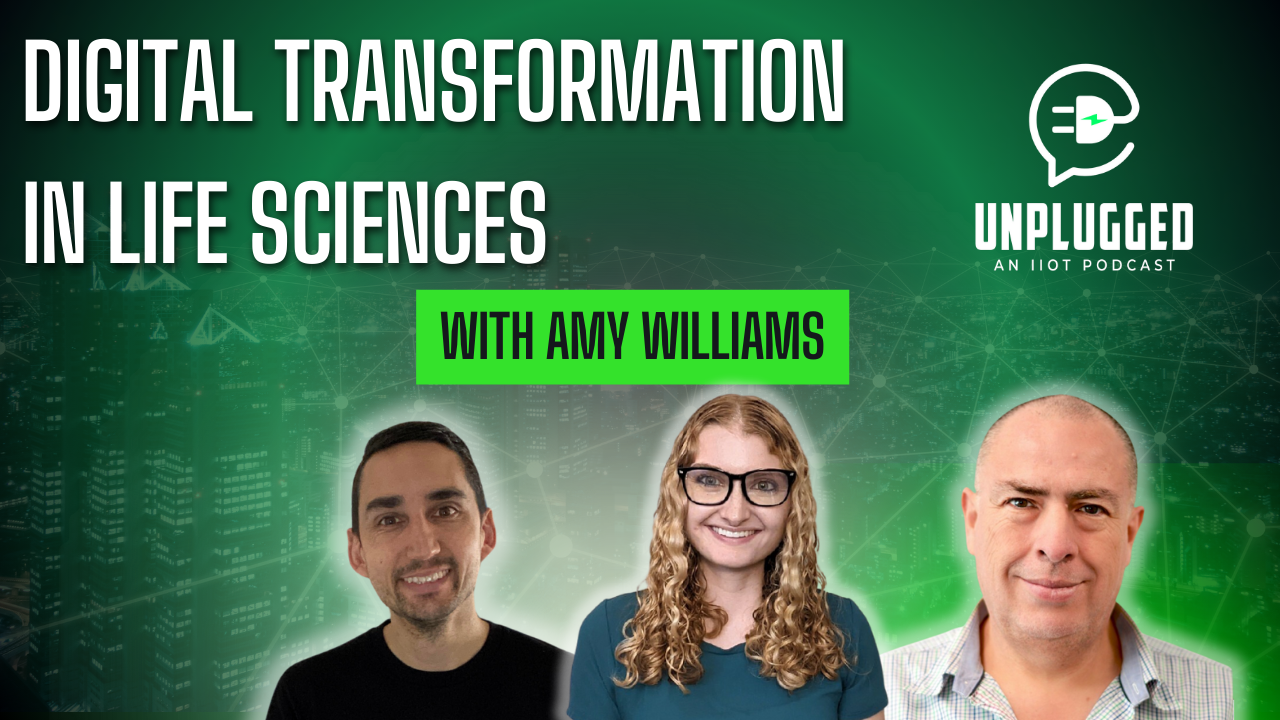


Hosts Phil Seboa and Ed Fuentes are joined by Amy Williams, a Systems Engineer at Skellig, to explore the discuss landscape of digital transformation in life sciences. This episode covers Amy’s insights on graph databases, the benefits of a unified namespace, and the push for digitalization to make healthcare more affordable.
Amy Williams is fascinated by the potential of graph databases, inspired by a discussion with David Schultz from RISE. She explains, “Graph databases are intriguing because they can handle complex and evolving relationships between data points effectively.” This feature is especially promising for life sciences, where the relationships between molecules, treatments, and patient outcomes are intricate and continually changing. By adopting graph databases, the pharmaceutical industry can manage and understand these complex relationships more effectively, leading to more accurate and timely decisions.
Graph databases also pave the way for advancements in personalized medicine. With vast amounts of patient data created every day, the ability to model and query these relationships can help in tailoring treatments specifically to individual patients. As Amy notes, "The complexity in life sciences data is a perfect fit for graph databases, making them a standout choice for future developments in the field."
The discussion also highlighted the critical role of a unified namespace (UNS) in managing digital data efficiently. Ed Fuentes points out, “A unified namespace simplifies how data is organized and queried, making it incredibly useful for large-scale operations.” Traditionally, life sciences have relied on cumbersome paper records, but moving towards a digital approach brings substantial benefits. Amy elaborates, “Not just digitizing paper but creating a structured digital system helps ensure information is easily accessible and compliant with regulatory standards like the FDA.”
A UNS allows data from different sources and formats to be integrated seamlessly. This integration is crucial for achieving a holistic view of operations and for facilitating advanced analytics. Amy shares, "By using tools like Ignition Software for integrating data, companies can improve compliance and efficiency significantly." This method reduces redundancy, minimizes errors, and speeds up the manufacturing process, ultimately making medicine production more cost-effective.
Despite the proven benefits, adopting new technologies in life sciences is still fraught with challenges. Phil Seboa points out, "Resistance often stems from politics and vendor lock-ins with proprietary software." However, the push towards digital transformation continues, driven by leaders who see the value in more efficient and transparent systems.
Amy’s personal story underscores the human impact of these technological advancements. After her medical incident, she faced significant financial and logistical challenges, which many patients can relate to. By working towards making life sciences more efficient and affordable, Amy and her colleagues at Skellig strive to alleviate some of these burdens for future patients.
Amy Williams highlights, “Graph databases are intriguing because they can handle complex and evolving relationships effectively.” Ed Fuentes adds, "A unified namespace simplifies how data is organized and queried, making it incredibly useful for large-scale operations."
Graph Databases' Potential
In this episode, Amy Williams discussed the potential of graph databases, the role of a unified namespace, and the drive for digital transformation in life sciences. Understanding and applying these technological advancements can lead to more efficient and affordable healthcare, benefiting both the industry and patients. For those looking to dive deeper, consider exploring educational content from Skellig to learn about compliance-friendly tech applications.
Amy Williams is a systems engineer at Skellig with extensive experience in automation projects within the pharmaceutical industry. Her work focuses on integrating Industry 4.0 with life sciences to make healthcare more accessible and competitive. Amy’s commitment to technological innovation is driven by her personal experiences and her passion for improving the efficiency and affordability of the healthcare system.